 Gold IRA Pros And Cons
Compare trusted precious metals dealers for your retirement portfolio
/go/* outbound links are provided through our partner Augusta Precious Metals — competitor rows are for comparison and review only; kit requests are fulfilled by Augusta, not each listed company.Gold IRA pros and cons layer four properties: monetary-asset stability, tax-deferred shelter, IRS-approved storage at Delaware Depository in Wilmington, and direct ownership of physical bullion at IRC Section 408(m) gold fineness threshold of 99.5%. Form 5498 reports contributions and rollovers each tax year for Gold IRA pros and cons accounts.
Compare trusted precious metals dealers for your retirement portfolio
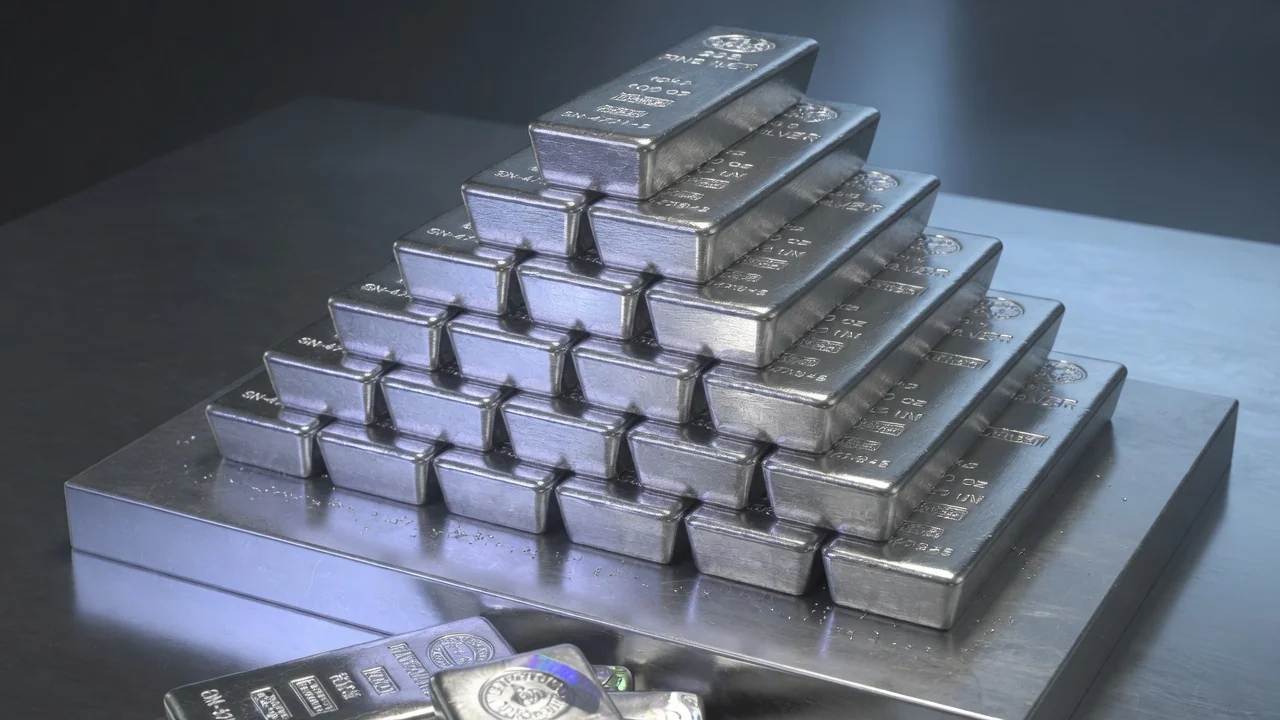
A gold IRA holds IRS-approved physical gold, silver, platinum, and palladium inside a tax-advantaged retirement account — through a self-directed IRA custodian and an approved depository, never in personal possession. Gold must meet 0.9999 fineness (American Gold Eagle exception: 0.9167 per IRC §408(m)); silver must meet 0.9999; platinum and palladium must meet 0.9995. LBMA-approved refiners such as PAMP Suisse produce bars that meet these standards; numismatic coins do not qualify and trigger immediate distribution penalties.
Unlike paper assets such as stocks, bonds, and mutual funds, a gold IRA uses an IRS-approved custodian and an IRS-approved depository to hold physical bullion on your behalf. best gold IRA companies The account is a self-directed individual retirement account, meaning you or your representative direct the investments within IRS rules. The 2026 annual contribution limit is $7,000 ($8,000 for investors age 50 or older); 401(k), 403(b), and TSP rollovers are unlimited.
You can open a traditional gold IRA or a Roth gold IRA. gold ira questions A traditional gold IRA defers taxes until withdrawal and may reduce your current taxable income if you qualify for a deduction. A Roth gold IRA uses after-tax dollars and distributes tax-free in retirement. A direct rollover moves funds custodian-to-custodian with no tax consequences; an indirect rollover gives you 60 days to redeposit (the 60-day rollover rule) — missing this deadline triggers full income tax plus a 10% penalty.
One of the primary gold IRA pros is portfolio diversification. Gold maintains a near-zero long-run correlation to U.S. equities, making it one of the purest portfolio diversifiers available. Physical metals inside a gold IRA preserve purchasing power by hedging currency devaluation over long horizons — gold's 50-year CAGR of approximately 8% reflects its role as a durable inflation hedge.
Precious metals often move counter-cyclically to paper assets during economic uncertainty. A 5–15% gold IRA allocation reduces overall portfolio volatility without significantly reducing expected long-run returns, based on World Gold Council correlation data.
A gold IRA is still an IRA, so the familiar tax advantages apply: tax-deferred growth in a traditional gold IRA until RMDs begin at age 73 (per SECURE Act 2.0, §107), and tax-free growth in a Roth gold IRA with no RMD requirement. In-kind distributions — taking physical metal rather than cash at retirement — are permitted and taxed at fair market value.
Another gold IRA pro is tangible asset ownership: physical gold has no counterparty risk and cannot become insolvent, default, or be diluted — unlike every paper asset that depends on an issuer's ability to honor its obligations.
Gold IRAs cost $200–$600/year more than a standard brokerage IRA: custodian fees ($75–$300), annual depository storage ($100–$300), and per-transaction spreads ($25–$50). Storage comes in two forms: segregated storage keeps your specific bars identified separately (slight premium); commingled storage pools metals at lower cost. Both are IRS-compliant. The spot price vs. premium gap also matters: dealers charge a markup over spot price when you buy, and offer less than spot when you sell — the bid-ask spread represents a real cost that compounds over time.
A gold IRA liquidates in 3–5 business days: your custodian executes the sell order with the depository, and proceeds settle inside the account. This is reliable but not real-time like gold ETFs (GLD, IAU), which execute instantly during market hours at a fraction of the cost (0.25% expense ratio vs. $200–$600/year for a physical gold IRA).
While gold functions as a safe-haven asset, commodity price volatility is a real risk. Gold fell 28% from 2011 to 2015. Concentrating more than 15–20% of retirement assets in a single commodity amplifies this risk. The IRS home storage IRA prohibition is also firm: personal possession of IRA metals triggers immediate taxes plus a 10% early withdrawal penalty — the McNulty v. Commissioner ruling (157 T.C. No. 10, 2021) confirmed this with no exceptions. Prohibited transactions and disqualified persons rules under IRC §4975 can disqualify the entire IRA, not just a single transaction.
A gold IRA is worth it when you allocate 5–10% of retirement assets for inflation hedging — not as a core holding, because it pays no income and trails equities over 20-year windows. Accounts under $20,000 typically face 1–3% annual fee drag that overwhelms diversification benefits. A blended approach — modest gold IRA allocation plus low-cost index funds for the balance — provides inflation protection without sacrificing income potential.
A Gold IRA is a self-directed individual retirement account that holds physical precious metals — gold, silver, platinum, or palladium — instead of the paper assets found in conventional IRAs. The IRS first authorized these accounts under the Taxpayer Relief Act of 1997, giving retirement savers a federally sanctioned way to own tangible assets inside a tax-advantaged wrapper.
Unlike a standard brokerage IRA that might own stock ETFs or mutual funds, a Gold IRA requires three separate parties: a custodian (typically a bank or trust company approved by the IRS), a precious-metals dealer who sources the coins or bars, and a depository that physically stores the metal in a segregated or commingled vault. You never take possession of the metal yourself while it sits inside the IRA — doing so triggers an immediate taxable distribution plus a 10% early-withdrawal penalty if you are under age 59½.
Gold IRAs come in the same three structural flavors as ordinary IRAs. A Traditional Gold IRA uses pre-tax dollars, grows tax-deferred, and requires required minimum distributions (RMDs) starting at age 73. A Roth Gold IRA uses after-tax dollars, grows tax-free, and has no RMD requirement during the original owner's lifetime. A SEP Gold IRA is available to self-employed individuals and small-business owners with higher contribution limits — up to 25% of net self-employment income or $69,000 in 2026, whichever is less.
The 2026 standard contribution limit for Traditional and Roth Gold IRAs is $7,000 per year ($8,000 if you are age 50 or older, thanks to the $1,000 catch-up provision). These limits are set by the IRS and adjusted periodically for inflation. Rollovers from existing 401(k), 403(b), TSP, or traditional IRA accounts are not subject to the annual contribution cap, which is why most Gold IRA balances are funded through rollovers rather than fresh contributions.
Opening a Gold IRA involves more moving parts than a standard brokerage account, but the process is straightforward once you understand the sequence. Most reputable companies guide you through each stage and can complete the entire setup in five to ten business days.
The custodian is the IRS-approved institution that administers your account, files required tax forms (Form 5498, Form 1099-R), and ensures transactions comply with federal rules. Examples include Equity Trust Company, STRATA Trust, and GoldStar Trust. Custodian fees typically run $75–$300 per year in account-maintenance charges.
You can fund a Gold IRA through a direct contribution (up to $7,000 in 2026), a direct rollover from a former employer's 401(k), or a 60-day indirect rollover from an existing IRA. With a direct rollover, funds move institution-to-institution and you never touch the money, so there is no withholding and no risk of a taxable event. With an indirect rollover, your old custodian sends you a check; you must deposit 100% of the gross amount into the new IRA within 60 days or the IRS treats the shortfall as a taxable distribution.
Once funded, you direct your custodian to purchase IRS-approved metals from a dealer. Reputable dealers charge a premium of 3–5% over the live spot price for bullion coins and bars; numismatic (collectible) coins carry far higher markups and are not suitable for retirement accounts. Your dealer ships the metal directly to the approved depository — it never passes through your hands.
The depository (Delaware Depository, Brinks, CNT Depository, etc.) holds your metal in either segregated storage — your specific bars sit in a separate, labeled section — or commingled storage, where your metal is pooled with other customers' holdings of identical type and weight. Segregated storage typically costs $150–$300 per year; commingled storage runs $100–$200 per year. Annual statements from your custodian will reflect the current fair-market value of your holdings.
When you are ready to take a distribution, you have two options: an in-kind distribution (the depository ships physical metal to you) or a liquidation (the dealer buys back the metal and cash is sent to you). Either way, the fair-market value on the distribution date is treated as ordinary income for a Traditional Gold IRA, or is tax-free for a qualified Roth distribution.
The IRS imposes strict rules on which metals qualify for IRA ownership and how they must be stored. Violating any of these rules can disqualify your entire account, triggering immediate taxes and penalties on the full balance. Understanding the requirements before you invest is essential.
Collectible and numismatic coins — even gold ones — are prohibited under IRC Section 408(m). South African Krugerrands (91.67% pure, with no statutory exemption) and pre-1933 U.S. gold coins fall into this category. Any purchase of a prohibited item is treated as a distribution in the year of purchase.
Perhaps the most misunderstood rule: IRS regulations require that IRA-owned precious metals be stored at an approved depository, not in a home safe, a personal safe-deposit box, or any location under the account holder's control. Some companies market so-called "home storage" or "checkbook IRA" structures that claim to permit personal custody. The IRS has aggressively challenged these arrangements; the Tax Court has repeatedly ruled against them. The penalty for improper storage is full distribution of the account value, subject to income tax and the 10% early-withdrawal penalty.
Traditional Gold IRA holders must begin taking RMDs by April 1 of the year following the year they turn 73 (under SECURE 2.0 rules effective 2023). Because the assets are physical metal rather than cash, satisfying an RMD requires either liquidating enough metal to meet the required amount or taking an in-kind distribution of metal whose fair-market value equals the RMD. Roth Gold IRAs are exempt from RMDs during the original owner's lifetime.
Gold IRAs attract retirement investors for a specific set of reasons that conventional stock-and-bond portfolios cannot replicate. Below are the most compelling advantages, grounded in historical data and economic logic.
Gold's price has historically moved independently of the S&P 500. During the 2008 financial crisis, the S&P 500 lost approximately 37% while gold gained roughly 5%. During the COVID-19 selloff in early 2020, gold fell briefly but then surged to all-time highs above $2,000/oz while equity volatility remained extreme. A World Gold Council analysis covering 2001–2023 found that adding a 5–10% gold allocation to a balanced portfolio reduced portfolio volatility without meaningfully sacrificing returns — the textbook definition of an efficient diversifier.
Gold has preserved purchasing power over very long periods. An ounce of gold bought a fine toga in ancient Rome; today that same ounce buys a quality men's suit. Over the past 50 years — a period that includes 1970s stagflation, 2008 deflation fears, and 2021–2023 post-pandemic inflation — gold's compound annual return has approximated 8%, roughly keeping pace with or outpacing consumer price increases. For retirees worried about eroding purchasing power over a 20–30-year retirement horizon, this track record matters.
Gold is priced globally in U.S. dollars, but its value does not depend on any single government's creditworthiness. When the dollar weakens — as it tends to during periods of large fiscal deficits or monetary easing — gold prices typically rise in dollar terms. Central banks worldwide, including China, Russia, India, Turkey, and Poland, have been net buyers of gold every year since 2010, underscoring gold's role as a reserve asset that transcends currency risk.
Physically owning gold outside a retirement account is tax-inefficient: the IRS classifies gold as a collectible and taxes long-term capital gains at a maximum rate of 28% rather than the preferential 15%–20% rate that applies to stock gains. Inside a Traditional Gold IRA, all gains accumulate tax-deferred and are taxed as ordinary income on withdrawal — potentially at a lower rate in retirement. Inside a Roth Gold IRA, qualified withdrawals are entirely tax-free, making the Roth wrapper especially powerful for an asset with high long-term appreciation potential.
Unlike stocks, bonds, or money-market funds, physical gold has intrinsic value independent of counterparty promises. When you take a distribution from a Gold IRA, you can request delivery of actual coins or bars — an option that resonates with investors who distrust the financial system's digital infrastructure. This tangibility is psychologically and practically meaningful for many retirement savers.
No investment is without drawbacks, and Gold IRAs have a specific set of costs and limitations that every investor must weigh honestly before committing retirement savings. Understanding these disadvantages is just as important as appreciating the benefits.
The layered cost structure of a Gold IRA is the single biggest disadvantage compared to a low-cost index fund IRA. Typical all-in annual costs include: a one-time account-setup fee of $50–$150; annual custodian maintenance fees of $75–$300; annual storage fees of $100–$300 (or as a percentage of account value, typically 0.5%–1.0%); and dealer premiums of 3–5% over spot on every purchase. On a $50,000 account, total annual recurring costs might run $400–$600/year, equivalent to an expense ratio of 0.8%–1.2% — far above the 0.03%–0.10% charged by major index ETFs.
Gold sits in a vault and generates zero income. Stocks pay dividends; bonds pay coupons; real estate generates rent. Gold produces nothing. This means your entire return depends on price appreciation, which makes gold a poor choice as a primary retirement holding. Warren Buffett famously observed that all the gold ever mined would fit in a cube roughly 68 feet on each side, and that cube produces nothing. For compounding wealth over decades, income-generating assets have a structural advantage.
Gold is not a steady climber. After peaking at approximately $1,900/oz in September 2011, gold fell steadily and did not reclaim that level until mid-2020 — nearly nine years of flat-to-negative performance. An investor who retired in 2011 and needed to liquidate gold holdings to fund living expenses would have realized losses for most of that decade. Short-term price swings of 15–20% in a single year are common.
Selling physical gold inside an IRA is a multi-step process: you instruct the custodian, the custodian directs the depository to release the metal to the dealer, the dealer pays the custodian, and then funds are available in your account. This process typically takes 3–7 business days, compared to T+1 settlement for stocks. In a rapidly falling market, that delay can be costly.
The Gold IRA industry has attracted bad actors who charge excessive markups, push overpriced numismatic coins, or make exaggerated claims about gold's performance. The FTC and SEC have both issued consumer alerts about Gold IRA scams. Investors must verify that their custodian is IRS-approved, that their dealer is a member of the Industry Council for Tangible Assets (ICTA) or similar trade body, and that their depository is independently audited. Always request written fee disclosures before transferring any funds.
One of the most important — and frequently obscured — aspects of evaluating a Gold IRA is understanding the complete fee structure. Because charges are spread across three separate entities (custodian, dealer, depository), the total cost is easy to underestimate. Here is a comprehensive breakdown of every charge you should expect.
Most custodians charge a one-time account-establishment fee ranging from $50 to $150. Some Gold IRA companies waive this fee entirely as a promotional offer for new accounts, particularly for balances above $25,000–$50,000.
IRS-approved custodians charge annual administration fees of $75–$300. These cover record-keeping, IRS tax-form preparation, account statements, and transaction processing. Some custodians charge a flat fee regardless of account size; others charge a percentage (commonly 0.25%–0.50% of account value), which becomes expensive on large balances.
When you purchase gold through your IRA, the dealer charges a premium above the spot price — the real-time market price at which gold trades on commodity exchanges. For standard bullion coins (American Gold Eagles, Canadian Maple Leafs), dealer premiums typically run 3–5% over spot for retail-sized purchases. For 1-oz gold bars from recognized refiners, premiums may compress to 1–3%. Watch for dealers who push proof coins, numismatic coins, or "exclusive" products at markups of 20–50% over spot — these carry far higher margins for the dealer and far lower resale value for you.
Approved depositories charge annual storage fees. Commingled (non-segregated) storage typically costs $100–$200 per year. Segregated storage — where your specific bars or coins are kept in a labeled, dedicated space — costs $150–$300 per year. Some depositories charge a flat annual fee; others charge a percentage of the metals' market value, commonly 0.10%–0.50% per year. On a $200,000 gold position, a 0.5% storage fee equals $1,000/year.
Some custodians charge transaction fees of $25–$75 each time you buy or sell metals within the IRA. When you liquidate, the dealer buying back your metal will pay slightly below the spot price — the bid-ask spread typically means you receive 1–3% less than spot on a buyback. Wire-transfer fees of $25–$35 may apply when distributing cash from your account.
On a $50,000 Gold IRA account, realistic annual costs might look like this: $200 custodian fee + $200 storage fee + $150 in amortized setup/transaction costs = approximately $550/year, or about 1.10% of account value. That hurdle must be cleared by gold price appreciation before you earn a real return. Always request a complete fee schedule in writing from every company you evaluate.
The tax treatment of a Gold IRA follows the same rules as any IRA of the same type — Traditional or Roth. Understanding these rules can meaningfully affect which structure is right for your situation and how much you ultimately keep after taxes.
Contributions to a Traditional Gold IRA may be tax-deductible in the year you make them, subject to income and workplace-retirement-plan limits. All growth — whether from gold price appreciation or, in a diversified account, from other assets — accumulates tax-deferred. You pay ordinary income tax only when you take distributions. The 2026 ordinary income tax rates run from 10% to 37%; your rate on distributions will depend on your total income in the withdrawal year. If you are in a lower bracket in retirement than during your working years, the Traditional structure is advantageous.
Roth contributions are made with after-tax dollars — no deduction on the front end — but all qualified withdrawals are completely tax-free, including decades of gold price appreciation. To make a "qualified" withdrawal, you must be at least 59½ and the Roth account must have been open for at least five years. There are no RMDs during the original owner's lifetime, which is a meaningful advantage for investors who do not need to tap the account in their 70s and want the gold to continue compounding tax-free for heirs.
Rolling over a pre-tax 401(k) into a Traditional Gold IRA is a non-taxable event when done as a direct rollover. Rolling over pre-tax funds into a Roth Gold IRA (a "Roth conversion") is fully taxable in the year of conversion — the converted amount is added to your ordinary income. Converting a large 401(k) balance in a single year can push you into a higher bracket, so many financial planners recommend spreading conversions across multiple years. Always consult a tax professional before executing a large Roth conversion.
Taking a distribution from any Gold IRA before age 59½ results in a 10% early-withdrawal penalty on top of ordinary income tax, unless an exception applies (disability, substantially equal periodic payments, first-time home purchase up to $10,000 lifetime for Roth, etc.). Because liquidating physical metal adds 3–7 business days to the process, Gold IRAs are particularly illiquid in an emergency — a further reason to maintain separate liquid assets outside the IRA.
A Gold IRA is not the only way to add gold exposure to a retirement portfolio. Understanding how it compares to the alternatives helps you choose the right vehicle for your specific goals, costs tolerance, and tax situation.
Gold ETFs trade on stock exchanges like shares and hold physical gold in trust. Inside a conventional brokerage IRA, you can buy GLD or IAU with near-zero trading costs; the expense ratios are 0.40% (GLD) and 0.25% (IAU) per year — far below a Gold IRA's typical 1%+ all-in cost. However, an ETF is a financial security backed by a counterparty (the fund sponsor and custodian bank). If you prioritize direct physical ownership, an ETF does not provide that. Some investors hold both: a Gold IRA for physical metal and ETF exposure inside a broader IRA for cost efficiency.
Mining stocks (Newmont, Barrick Gold, Agnico Eagle) and royalty companies (Franco-Nevada, Wheaton Precious Metals, Royal Gold) offer leveraged exposure to gold prices — when gold rises 10%, miners often rise 20–30%. They can also be held in any conventional IRA or taxable account without the special fees of a Gold IRA. The tradeoff: miners carry operational risk (labor disputes, cost overruns, political risk in mining jurisdictions) completely absent from physical gold, and they correlate more strongly with broad equity markets during crises.
Futures and options contracts allow highly leveraged gold exposure, suitable for sophisticated active traders. They are not appropriate inside an IRA for most retirement investors, as the leverage amplifies losses as well as gains and contracts expire, requiring active management. This comparison is largely academic for buy-and-hold retirement savers.
You can purchase gold coins and bars outside any retirement account — at a local coin dealer or online from major retailers (APMEX, JM Bullion, Kitco). Storing it at home or in a safe-deposit box carries no custodian or depository fees. However, gains are taxed at the 28% collectibles rate — not the lower 15%–20% long-term capital-gains rate applicable to stocks — and there is no tax deferral. For high-earning investors expecting large appreciation, the tax-deferred or tax-free growth inside a Gold IRA can more than offset the higher fee structure, especially over a multi-decade horizon.
Choosing the right Gold IRA company is critical. The company you work with determines the quality of customer service you receive, the pricing transparency of your transactions, the reputation of the custodian and depository they partner with, and ultimately how much of your retirement savings end up in gold rather than in fees. The companies below have earned strong reputations based on fee transparency, customer reviews, and industry standing.
Augusta is consistently rated among the top Gold IRA companies for customer education and fee transparency. The company charges a one-time $50 setup fee, a $100/year custodian fee (through their partner Equity Trust), and $100/year storage at Delaware Depository. Augusta requires a minimum investment of $50,000 and does not sell numismatic or proof coins — a significant consumer-protection differentiator. Their lifetime customer service commitment and A+ BBB rating reflect a company built for long-term relationships rather than one-time transactions.
Goldco is one of the largest Gold IRA providers by volume, with over $1 billion in precious-metals placements. They offer both gold and silver IRAs, a $25,000 minimum investment, and a buyback program that guarantees they will repurchase your metals at fair market value when you are ready to sell. Goldco regularly offers first-year fee waivers for qualifying accounts and has earned an A+ BBB rating and thousands of five-star reviews on Trustpilot and Google.
American Hartford Gold caters to investors who want a lower barrier to entry: their minimum is $10,000, making them one of the more accessible providers. They offer competitive pricing on American Gold Eagles and Maple Leafs, a price-match guarantee, and free IRA rollovers. The company has been rated the No. 1 Gold IRA company by Inc. magazine and holds an A+ BBB rating. They partner with Brinks and Delaware Depository for storage.
Birch Gold Group has been operating since 2003, making it one of the longest-tenured Gold IRA companies. They offer a $10,000 minimum, free information kits, and in-house precious-metals specialists (called IRA Specialists) rather than commissioned salespeople. Birch partners with Brinks and Delaware Depository. Their annual flat-fee structure — $100 custodian + $100 storage for accounts under $25,000; slightly higher for larger accounts — is clearly disclosed upfront.
A Gold IRA is not universally good or bad — it depends on your goals, timeline, and existing portfolio composition. For investors who have most of their retirement savings in stocks and bonds, adding a 5–15% allocation to physical gold via a Gold IRA can meaningfully reduce portfolio volatility and provide inflation protection. Gold is a poor primary retirement vehicle because it generates no income and carries high fees; it is best used as a diversifying satellite holding, not a core position.
Most financial planners recommend a gold allocation of 5–15% of total retirement assets. The World Gold Council's research suggests that allocations in the 2–10% range produce the greatest improvement in risk-adjusted returns for a typical 60/40 portfolio. Allocations above 20% sacrifice too much income potential from dividend-paying stocks and interest-bearing bonds.
No. IRS regulations require that IRA-owned precious metals be held by an approved custodian and stored at an approved depository. Home storage of IRA metals is prohibited and constitutes a taxable distribution — meaning the full value of your account is taxed as income plus a 10% penalty if you are under 59½. Avoid any company that claims to offer a legal "home storage" Gold IRA; the IRS has consistently ruled against these structures.
Minimums vary by company. American Hartford Gold and Birch Gold Group allow accounts with as little as $10,000. Augusta Precious Metals and Regal Assets require $50,000. The IRS sets no minimum, only the annual contribution limit of $7,000 ($8,000 with catch-up). Most investors fund Gold IRAs with rollovers from existing retirement accounts rather than annual contributions, which is why company-imposed minimums tend to be higher than the IRS limit.
Yes, if done correctly. A direct rollover from a former employer's 401(k) to a Traditional Gold IRA is a non-taxable event — the funds move directly from one institution to another without passing through your hands, so there is no withholding and no penalty. If your 401(k) is with a current employer, you may need to reach age 59½ before the plan allows an in-service rollover, depending on the plan's rules. Always initiate a direct rollover rather than an indirect rollover (where a check is issued to you) to avoid mandatory 20% withholding.
Your Gold IRA passes to the beneficiaries you designate on the account. A surviving spouse can treat the inherited IRA as their own and defer distributions. Non-spouse beneficiaries generally must withdraw all funds within 10 years of the original owner's death under SECURE 2.0 rules. They can take distributions either as cash (after the custodian liquidates the metal) or as in-kind distributions of physical metal. Estate planning considerations — particularly for large Gold IRA balances — should be reviewed with an estate attorney and tax advisor.
Gold IRA custodians are regulated and must be approved by the IRS. Precious metals dealers are regulated at the state level (dealer licensing laws vary) and by commodity trading rules at the federal level. However, the Gold IRA marketing and sales industry is not comprehensively regulated, which is why the FTC and SEC have issued multiple consumer warnings about deceptive practices. Always verify that the custodian your company uses is IRS-approved, that the depository is independently insured and audited, and that fee schedules are provided in writing before you invest.
If you've decided a gold IRA fits your retirement strategy, the five companies below consistently rank highest for fee transparency, IRS compliance infrastructure, minimum investment flexibility, BBB rating, and customer service track records.
| Rank | Company | Rating | Minimum | BBB | Key Features | Action |
|---|---|---|---|---|---|---|
1 |  Augusta Precious Metals | $50,000 | A+ |
| ||
2 |  Goldco Precious Metals | $25,000 | A+ |
| ||
3 |  Birch Gold Group | $10,000 | A+ |
| ||
4 |  American Hartford Gold | $10,000 | A+ |
| ||
5 |  Noble Gold Investments | $20,000 | A+ |
|

Last reviewed: October 2026. Fee data sourced from company disclosure documents reviewed Q1 2026.
Get Free Kit
Get Free Kit →✓ No obligation ✓ 100% Free ✓ Ships in 24-48h
The main downsides are mandatory fees of $200-600/year above standard IRAs (custodian $75-300/year + depository storage $100-300/year + per-transaction $25-50), zero passive income (no dividends or interest), 3-5 business day settlement vs. real-time ETF trading, strict IRS compliance (personal possession triggers immediate taxes + 10% penalty), and commodity price volatility (gold fell 28% from 2011-2015).
Buffett argues gold is a nonproductive asset that pays no dividends, generates no cash flow, and relies entirely on price appreciation. In his 2011 Berkshire shareholder letter, he noted all the world's gold was worth $9.6 trillion — enough to buy all U.S. cropland plus 16 ExxonMobils. Gold proponents counter that it functions as portfolio insurance against currency devaluation and systemic risk, not as a growth engine.
$1,000 invested in gold in April 2016 at approximately $1,240/oz would be worth approximately $2,100 in April 2026 at approximately $2,600/oz — a gain of roughly 110%, or about 7.6% annualized. For comparison, $10,000 invested in April 2006 at ~$600/oz would be worth approximately $43,000-$48,000 in April 2026 — a 330%-380% gain (~7.5%-8.5% annualized). The S&P 500 returned approximately 9-10% annualized (including dividend reinvestment) over both periods. Gold approximates equity returns over full cycles but produces no dividends, making total return slightly unfavorable vs. equities over most 10- and 20-year windows — reinforcing the 5-15% allocation principle rather than a concentrated gold position.
A gold IRA works in 5 steps: (1) Open account with IRS-approved custodian; (2) Fund via contributions ($7,000/$8,000 limit in 2026), direct IRA transfer, or 401k/403b/TSP rollover; (3) Buy IRS-approved metals meeting fineness standards (gold 0.9999 or American Gold Eagle at 0.9167, silver 0.9999, platinum/palladium 0.9995); (4) Custodian arranges storage at IRS-approved depository; (5) Take distributions at retirement by selling for cash or taking in-kind. Traditional gold IRAs require RMDs at age 73; Roth gold IRAs have no RMD requirement.
Fidelity does not offer a self-directed gold IRA holding physical metals. For physical gold IRA ownership, you need a self-directed IRA custodian such as Equity Trust, GoldStar Trust, or Strata Trust. Fidelity does offer gold ETF exposure (GLD, IAU) within standard IRA accounts, which provides gold price exposure without storage fees and IRS compliance complexity — a simpler alternative if you don't need direct physical ownership.

The process was straightforward and the customer service was excellent. Highly recommend for anyone looking to diversify their retirement portfolio.
February 2026
I was hesitant at first, but the educational resources helped me understand exactly what I was investing in. Very professional experience.
January 2026
Good service overall. The transfer took about two weeks but everything was handled professionally.
March 2026